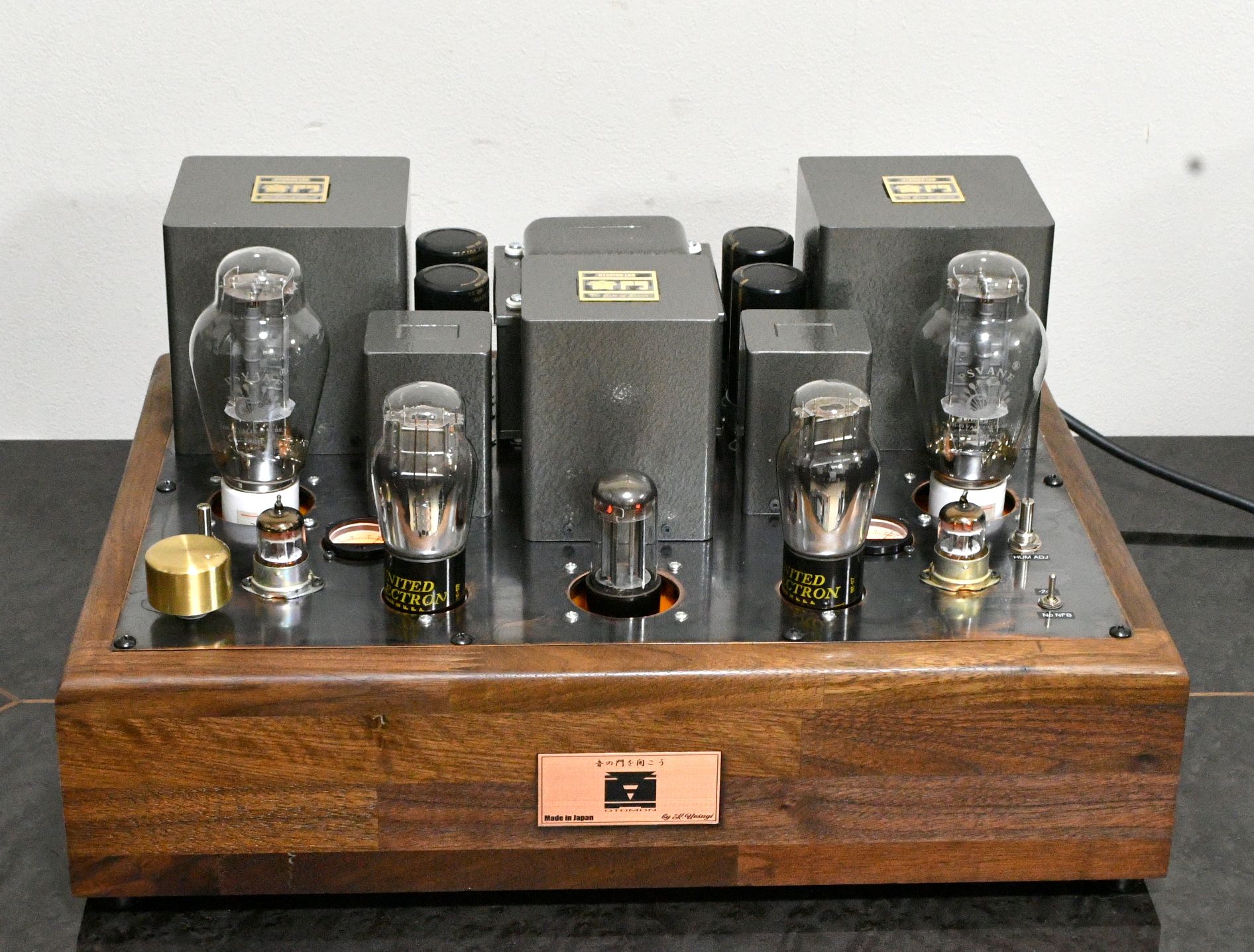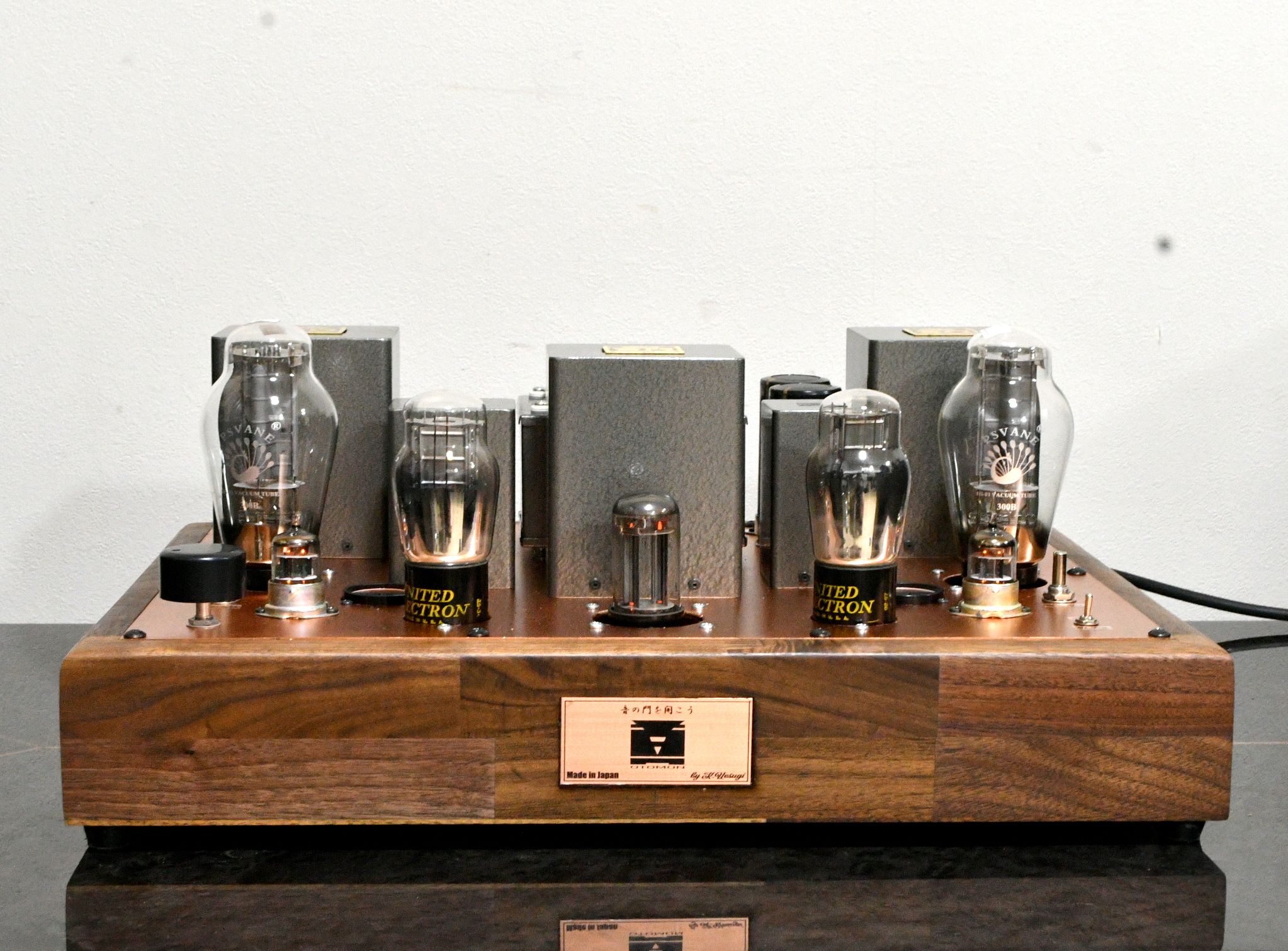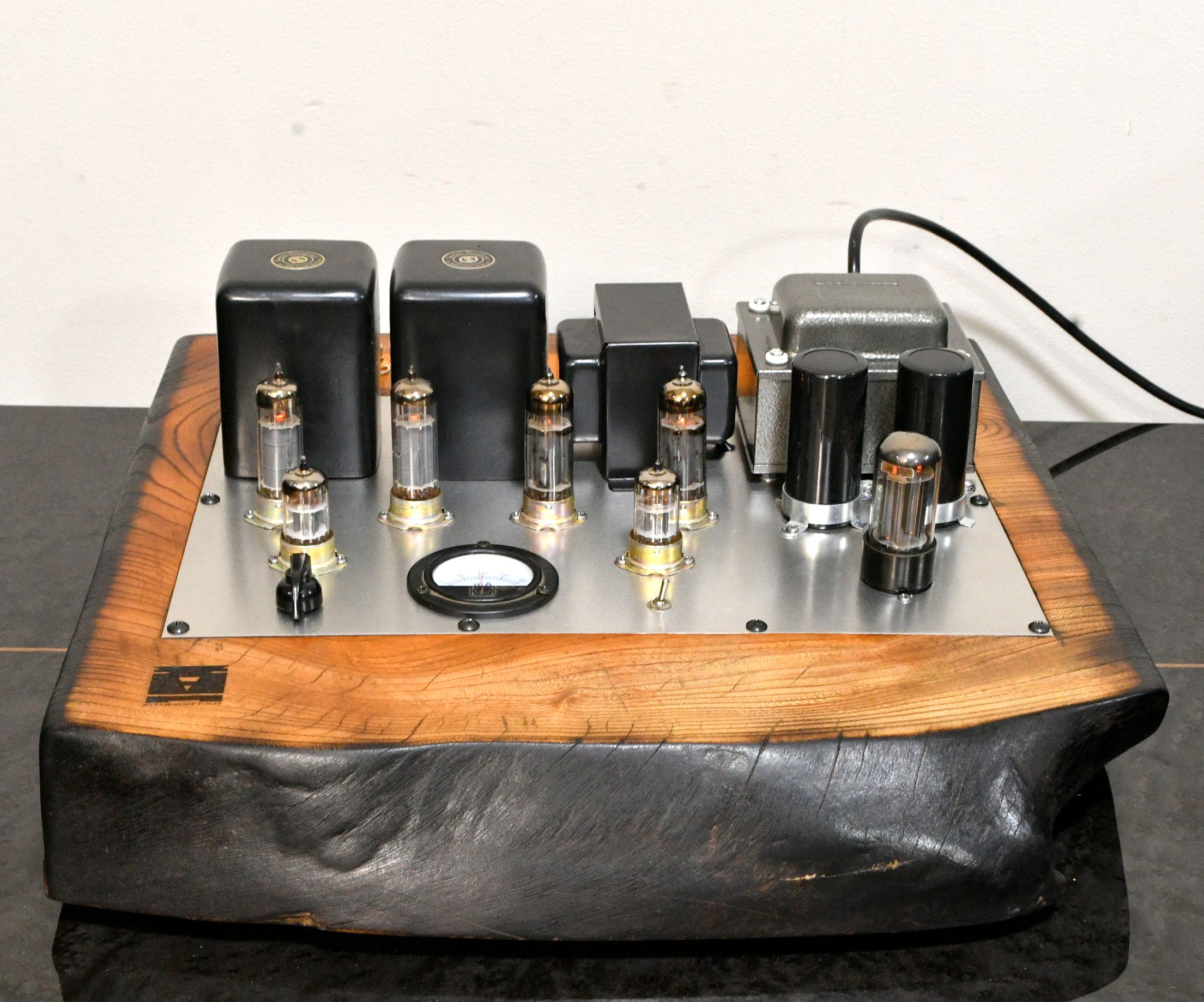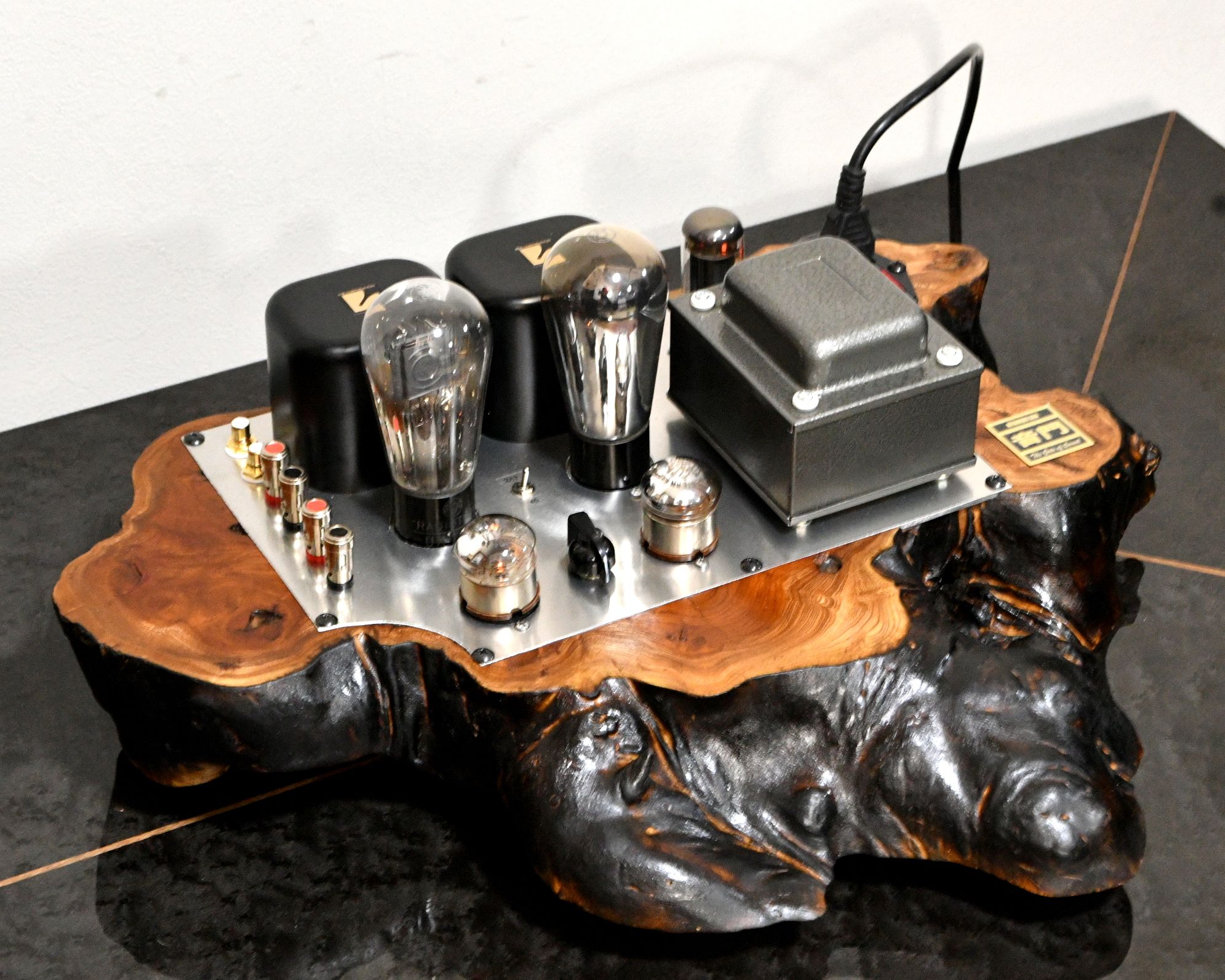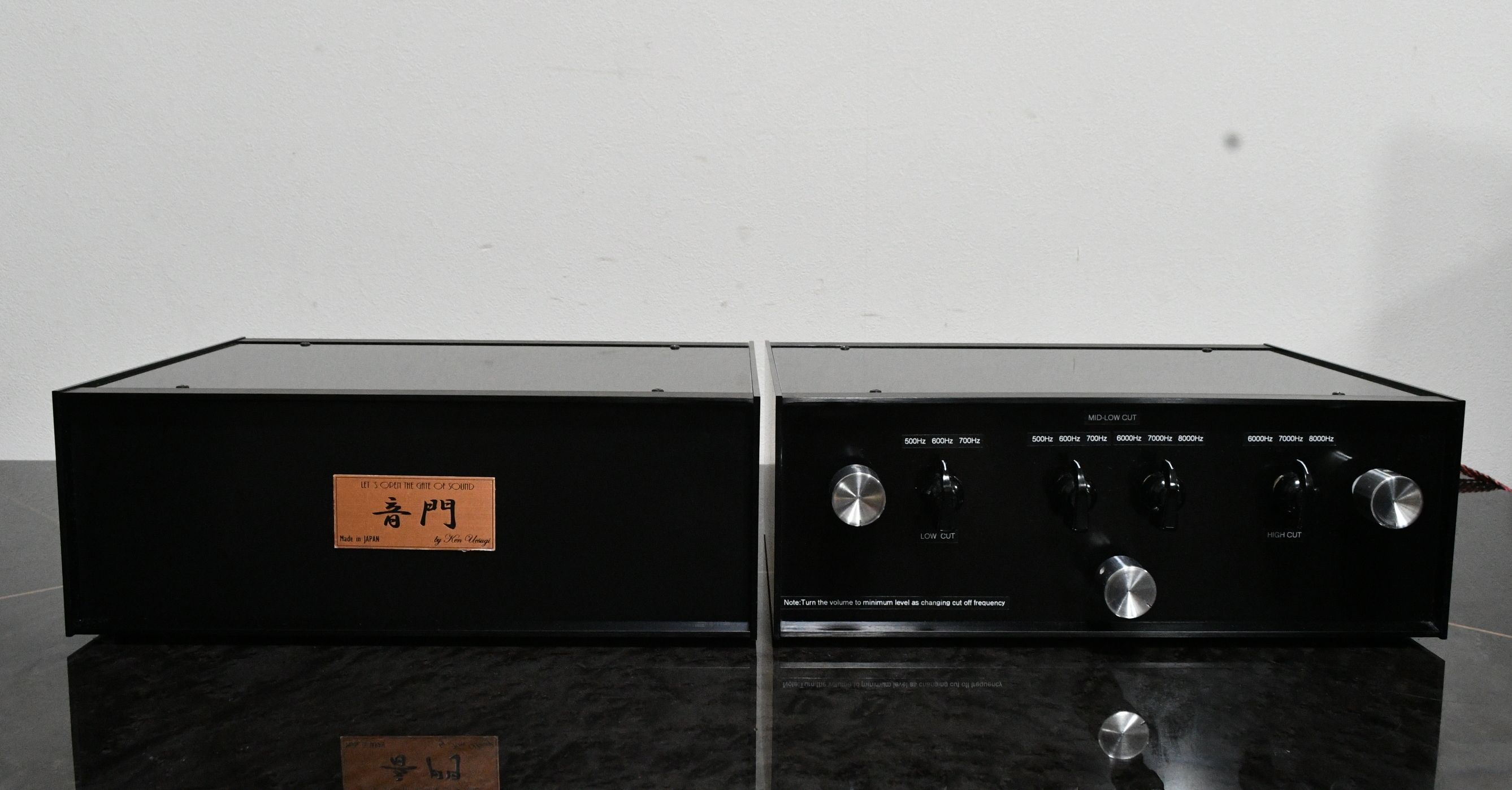
We can provide
power transformer which use for 117V, 120V, 220V, 230V, 240V.
YouTube channel > Otomon YouTube Channel
Facebook Channel: Otomon Vintage FB
YouTube channel > Otomon YouTube Channel
Facebook Channel: Otomon Vintage FB
I will give discount 10% or more for all item in my eBay listing, Contact Us for more detail
[ Review ]OTOMON LAB The Empire 4212 SE tube amplifier * output 40W/channel
Technical data is just an improve that item was tested carefully before sending to customer. While our products consistently achieve good to excellent technical figures compared to commercial alternatives, those numbers serve only to confirm that the design contains no engineering errors.
We could, in most cases, apply active techniques to make the specifications look even more impressive — but if doing so strips away originality or musical character, we will not do it. Our aim is to build equipment that sounds beautiful, not equipment that measures beautifully.
At OTOMON, music is judged by the ear and no instrument can replicate the human 's ear.
We could, in most cases, apply active techniques to make the specifications look even more impressive — but if doing so strips away originality or musical character, we will not do it. Our aim is to build equipment that sounds beautiful, not equipment that measures beautifully.
At OTOMON, music is judged by the ear and no instrument can replicate the human 's ear.
The Appeal of Otomon's Hand-Built Tube Amplifiers
Listening to the STC4212E Single-Ended Amplifier on Analog
Text by Takashi Iwai / Main photos by Norio Tashiro
A monaural amplifier delivering 40W of output from a directly-heated triode
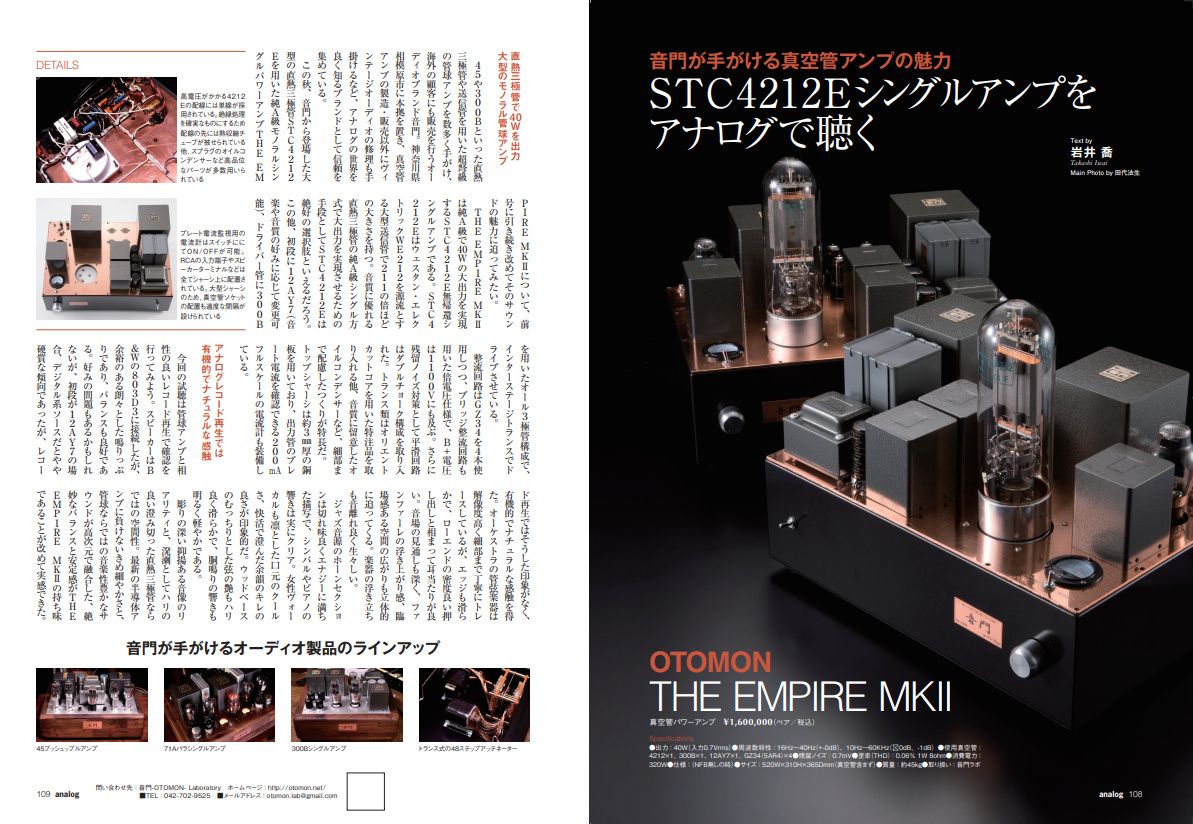
This autumn, Otomon (音門) has released a large single-ended power amplifier, THE EMPIRE, using the directly-heated triode STC 4212E in a pure Class A monaural configuration. Following our previous coverage, we take another close look at THE EMPIRE MKII and explore the appeal of its sound.
Otomon is an audio brand based in Sagamihara, Kanagawa Prefecture. The workshop has built numerous ultra-heavyweight tube amplifiers using triodes and transmitting tubes, sells to customers overseas as well as domestically, and is also trusted for its work restoring vintage audio equipment — a brand well known to those familiar with the world of analog audio.
The STC 4212E is a large transmitting tube descended from the Western Electric 212, roughly twice the size of the 211, and prized for its excellent sound quality. THE EMPIRE MKII is a no-feedback, pure Class-A single-ended amplifier built around this STC 4212E, achieving a large output of 40W through this single-ended topology — a considerable feat for a directly-heated triode design.
Listening to the STC4212E Single-Ended Amplifier on Analog
Text by Takashi Iwai / Main photos by Norio Tashiro
A monaural amplifier delivering 40W of output from a directly-heated triode
This autumn, Otomon (音門) has released a large single-ended power amplifier, THE EMPIRE, using the directly-heated triode STC 4212E in a pure Class A monaural configuration. Following our previous coverage, we take another close look at THE EMPIRE MKII and explore the appeal of its sound.
Otomon is an audio brand based in Sagamihara, Kanagawa Prefecture. The workshop has built numerous ultra-heavyweight tube amplifiers using triodes and transmitting tubes, sells to customers overseas as well as domestically, and is also trusted for its work restoring vintage audio equipment — a brand well known to those familiar with the world of analog audio.
The STC 4212E is a large transmitting tube descended from the Western Electric 212, roughly twice the size of the 211, and prized for its excellent sound quality. THE EMPIRE MKII is a no-feedback, pure Class-A single-ended amplifier built around this STC 4212E, achieving a large output of 40W through this single-ended topology — a considerable feat for a directly-heated triode design.
Input stage: 12AY7 (interchangeable depending on musical taste and sound preference)
Driver stage: 300B, driving the output stage via an interstage transformer
Rectification: GZ34 × 4, in an all-triode signal path
Power supply: Voltage-doubler circuit, with B+ reaching as high as 1,100V, together with bridge rectification
Noise reduction: A double-choke smoothing circuit is used as a countermeasure against residual noise
The STC 4212E is driven without any global feedback, functioning as a no-feedback single-ended amplifier — a natural choice given the tube's inherent quality as a large transmitting triode.
Sprague oil capacitors and other high-grade parts are used throughout, with careful attention paid to sound quality down to the smallest detail
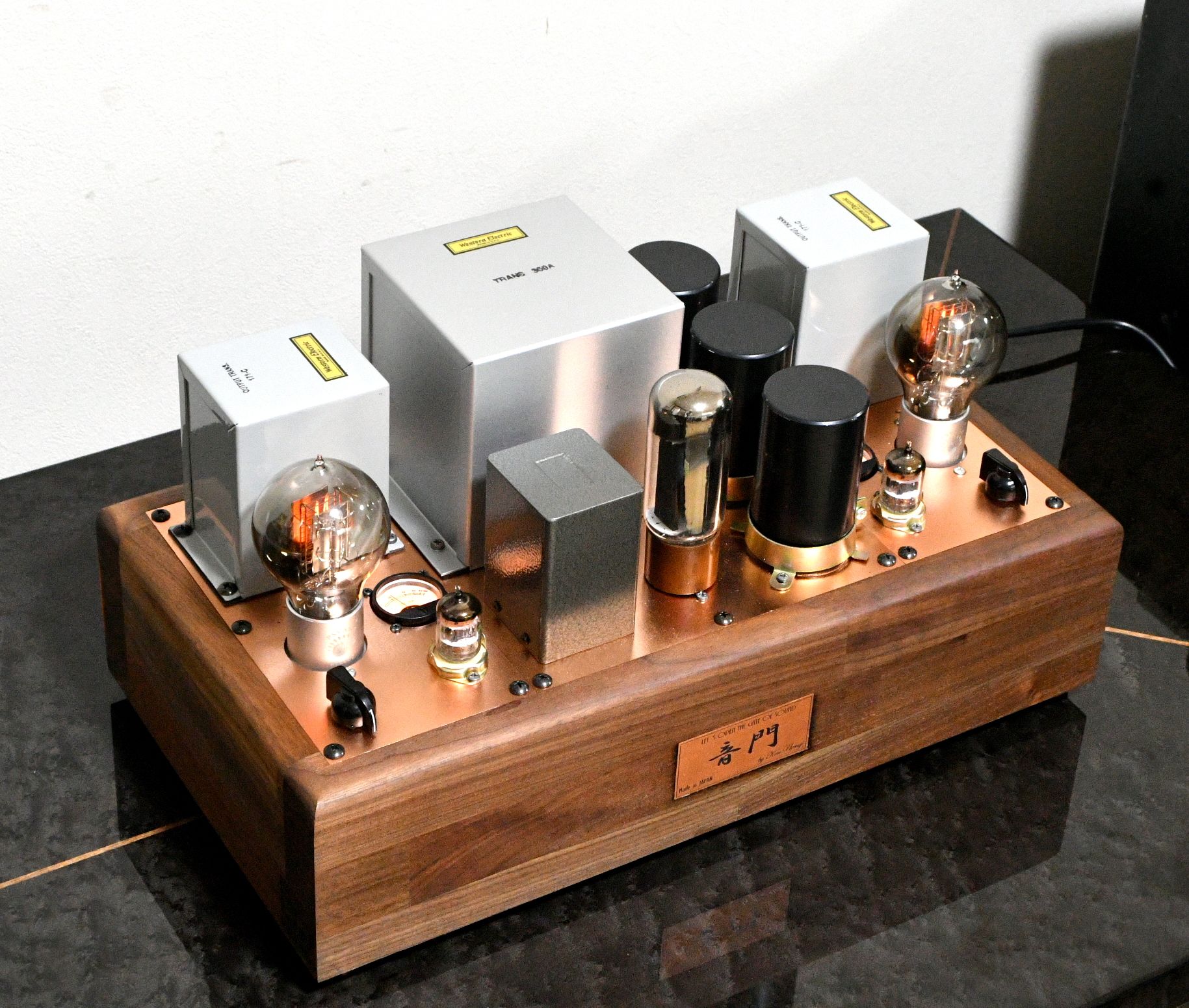
The top chassis uses roughly 3mm-thick copper plate A full-scale ammeter is fitted, allowing the output tube's plate current (around 200mA) to be monitored directly
Listening on Analog: An Organic, Natural Texture
This listening test was conducted with speakers well suited to tube amplification — B&W 803D3 was used for the pairing. With digital sources, the sound leaned somewhat hard and rigid, but with good vinyl playback the amplifier's character showed through with a spacious, generous, full-bodied presentation and good tonal balance (this may partly come down to the 12AY7 input stage, though that's a matter of taste).
Orchestral works: High resolving power traces fine detail carefully, with smooth edges and a dense, well-projected low end. The sense of depth and openness in the soundstage is excellent — fanfares lift with a real sense of presence, and the space expands three-dimensionally. Instruments stand out vividly and with a natural sense of "leaving the speakers."
Jazz recordings: The horn section cuts through with sharp, energetic articulation. Cymbals and piano are rendered with clear, crisp imaging. Female vocals have a cool, composed clarity around the mouth, with a bright, clean sense of decay. The upright bass has a plump, lustrous string tone with good body and shine, and the resonance of the instrument's body rings out bright and light.
The Character of THE EMPIRE MKII THE EMPIRE MKII presents a richly sculpted, expressive sound image with vivid, clear spaciousness — the kind only a directly-heated triode can deliver — while matching the fine detail of the latest solid-state amplifiers. The result is a musically rich tube sound fused at a high level with modern resolution, striking an exquisite balance and sense of stability that becomes all the more apparent on repeated listening.
A switch lets the plate-current monitoring ammeter be turned ON/OFF as needed. RCA input terminals and speaker terminals are all mounted on the chassis top. The large chassis allows generous spacing between the tube sockets. Single-strand wire is used for the high-voltage wiring to the 4212E; heat-shrink tubing is fitted over the wire ends to ensure secure insulation. Sprague oil capacitors and other high-grade parts are used extensively throughout. Specifications
Output40W (input 0.7Vrms)Frequency response16Hz–40kHz (+0dB), 10Hz–60kHz (0dB, –1dB)
Distortion (THD)0.06% at 1W, 8Ω
Residual noise0.7mV
Tubes used4212 × 1, 300B × 1, 12AY7 × 1, GZ34 (5AR4) × 4
Power consumption320W
DimensionsW520 × H310 × D365mm (excluding tubes)
WeightApprox. 45kg
NFB: None
Driver stage: 300B, driving the output stage via an interstage transformer
Rectification: GZ34 × 4, in an all-triode signal path
Power supply: Voltage-doubler circuit, with B+ reaching as high as 1,100V, together with bridge rectification
Noise reduction: A double-choke smoothing circuit is used as a countermeasure against residual noise
The STC 4212E is driven without any global feedback, functioning as a no-feedback single-ended amplifier — a natural choice given the tube's inherent quality as a large transmitting triode.
Sprague oil capacitors and other high-grade parts are used throughout, with careful attention paid to sound quality down to the smallest detail
The top chassis uses roughly 3mm-thick copper plate A full-scale ammeter is fitted, allowing the output tube's plate current (around 200mA) to be monitored directly
Listening on Analog: An Organic, Natural Texture
This listening test was conducted with speakers well suited to tube amplification — B&W 803D3 was used for the pairing. With digital sources, the sound leaned somewhat hard and rigid, but with good vinyl playback the amplifier's character showed through with a spacious, generous, full-bodied presentation and good tonal balance (this may partly come down to the 12AY7 input stage, though that's a matter of taste).
Orchestral works: High resolving power traces fine detail carefully, with smooth edges and a dense, well-projected low end. The sense of depth and openness in the soundstage is excellent — fanfares lift with a real sense of presence, and the space expands three-dimensionally. Instruments stand out vividly and with a natural sense of "leaving the speakers."
Jazz recordings: The horn section cuts through with sharp, energetic articulation. Cymbals and piano are rendered with clear, crisp imaging. Female vocals have a cool, composed clarity around the mouth, with a bright, clean sense of decay. The upright bass has a plump, lustrous string tone with good body and shine, and the resonance of the instrument's body rings out bright and light.
The Character of THE EMPIRE MKII THE EMPIRE MKII presents a richly sculpted, expressive sound image with vivid, clear spaciousness — the kind only a directly-heated triode can deliver — while matching the fine detail of the latest solid-state amplifiers. The result is a musically rich tube sound fused at a high level with modern resolution, striking an exquisite balance and sense of stability that becomes all the more apparent on repeated listening.
A switch lets the plate-current monitoring ammeter be turned ON/OFF as needed. RCA input terminals and speaker terminals are all mounted on the chassis top. The large chassis allows generous spacing between the tube sockets. Single-strand wire is used for the high-voltage wiring to the 4212E; heat-shrink tubing is fitted over the wire ends to ensure secure insulation. Sprague oil capacitors and other high-grade parts are used extensively throughout. Specifications
Output40W (input 0.7Vrms)Frequency response16Hz–40kHz (+0dB), 10Hz–60kHz (0dB, –1dB)
Distortion (THD)0.06% at 1W, 8Ω
Residual noise0.7mV
Tubes used4212 × 1, 300B × 1, 12AY7 × 1, GZ34 (5AR4) × 4
Power consumption320W
DimensionsW520 × H310 × D365mm (excluding tubes)
WeightApprox. 45kg
NFB: None

The Other Same Items
Newest Items In Same Category